

In a hospital, sterilising surgical instruments is not simply a matter of cleaning equipment. Before an instrument reaches the sterilisation stage, it has to go through a process that removes contamination and prepares it for safe reuse.
Medford Technologies↗ is working on washer-disinfectors designed for hospitals, particularly Central Sterile Supply Department (CSSD) rooms. Instead of relying entirely on imported machines, the company is building its own equipment in India while also working on customised medical-device development and R&D.
The Problem Medford Technologies Wanted to Solve
Medford Technologies identified a critical gap in hospital workflows: surgical instruments must be properly cleaned and disinfected before sterilisation.
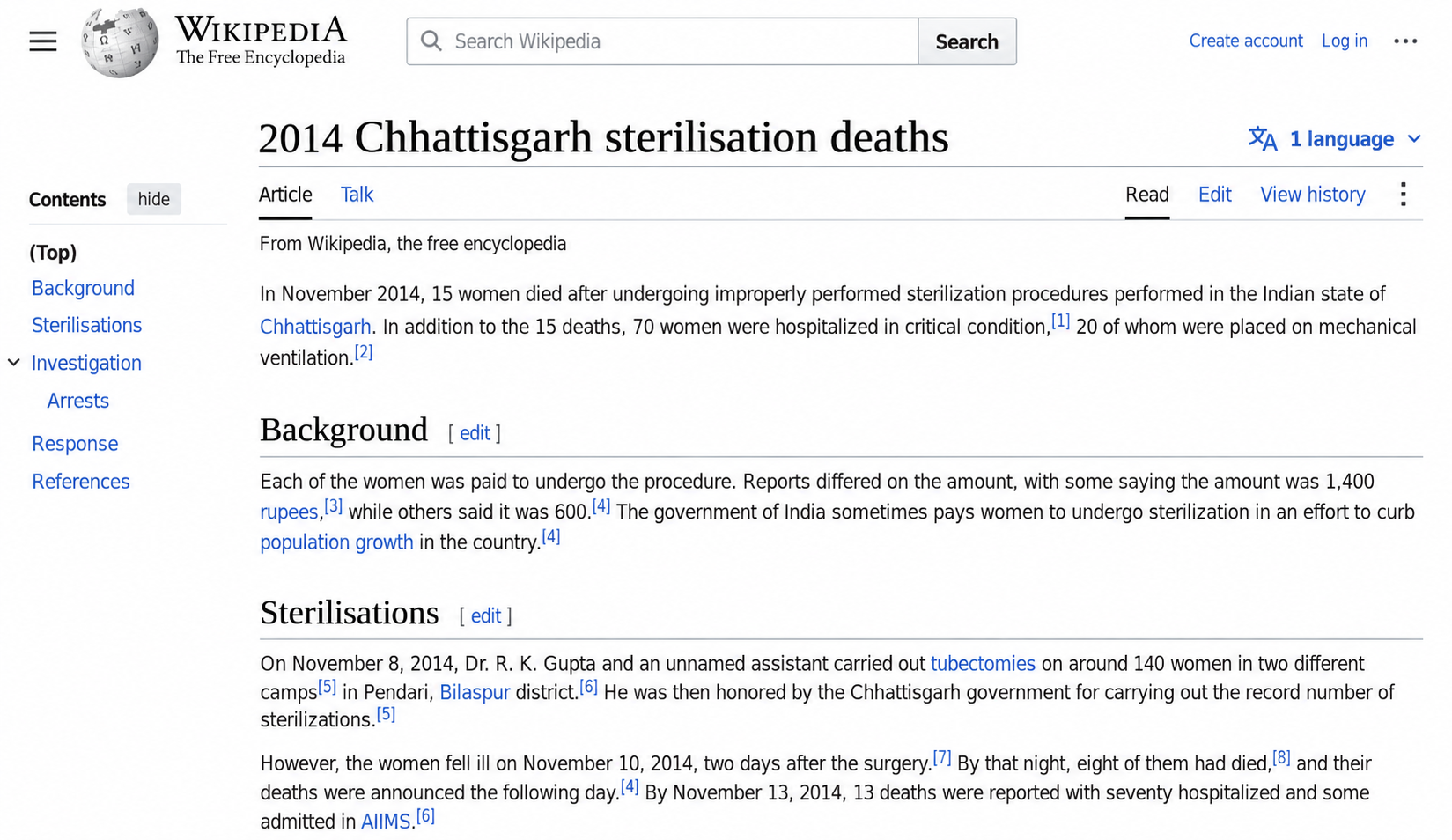
The 2014 Chhattisgarh sterilisation deaths↗, in which 15 women died following improperly performed sterilisation procedures, highlighted the importance of safe and controlled medical reprocessing.
This led Medford Technologies to look beyond sterilisation itself and focus on the process that comes before sterilisation.
“Before sterilisation, let’s look at the pre-process.”
That thinking led the company toward washer-disinfectors and the opportunity to develop domestic solutions for India's largely import-dependent market.
From Pre-Cleaning to Disinfection: The Step Before Sterilisation
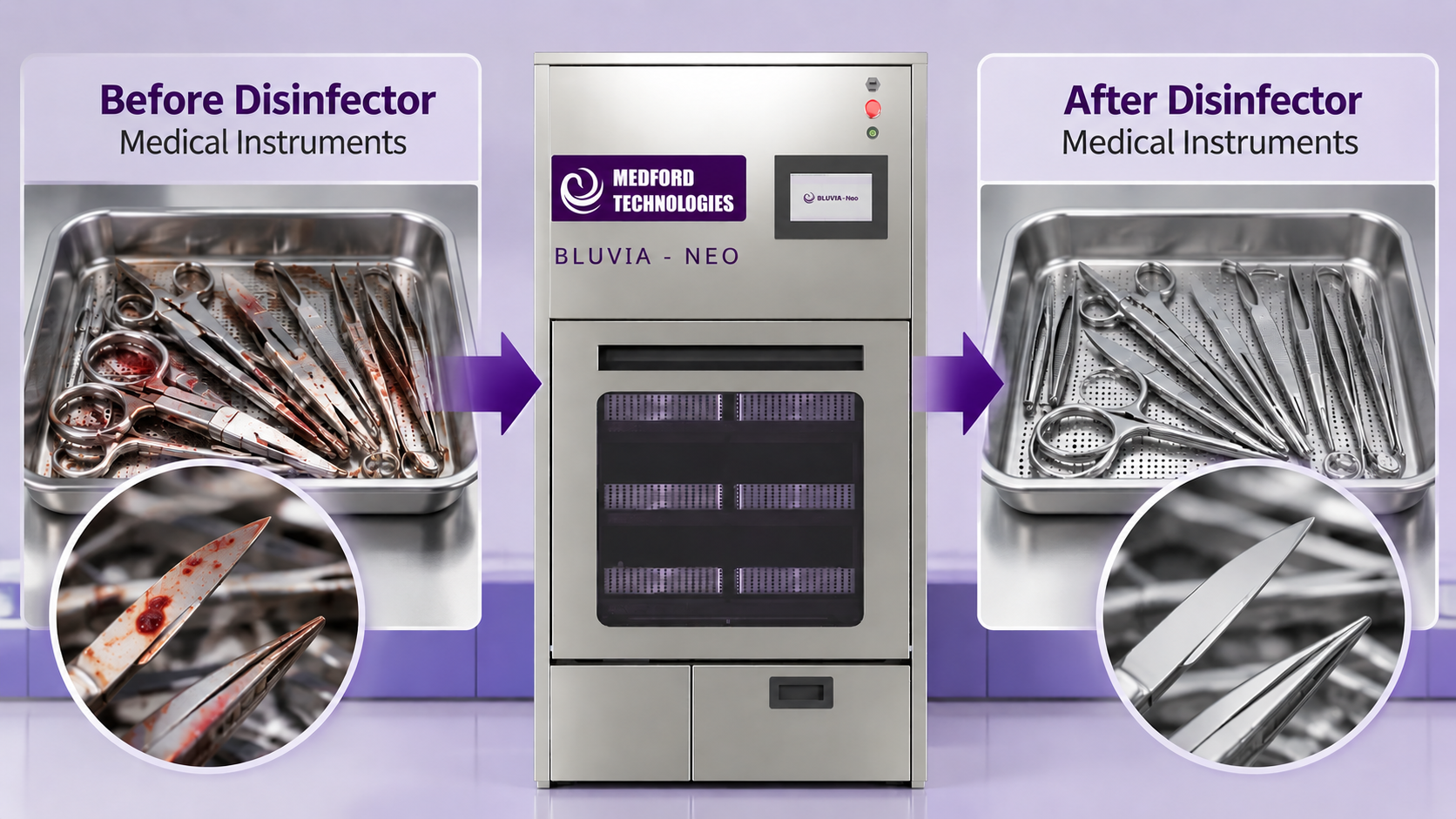
Medical instruments can carry blood, tissue, and other contaminants after use, making effective cleaning an essential part of the reprocessing workflow. Before instruments can be safely sterilised, they need to undergo a controlled cleaning and disinfection process to reduce contamination and prepare them for the next stage.
This is where Medford Technologies identified an opportunity to strengthen the pre-sterilisation process with advanced washer-disinfector technology. The goal was to develop a reliable, automated solution that could improve consistency, reduce manual handling, and support safer instrument reprocessing in hospitals.
This vision led to the development of BLUVIA Neo, bringing the focus to the critical step between used medical instruments and sterilisation.
From a Market Observation to a Product
As Medford Technologies researched the Indian market, the company found that many washer-disinfector products available locally were imported. At the same time, the company identified a need for hospital processes and equipment that could align with established standards.
Medford Technologies therefore focused on developing equipment locally and adapting it to the requirements of Indian hospital environments.
The approach was not limited to selling a machine. The company aimed to develop the technology, manufacture it in India and build it around the requirements of the hospital ecosystem.
What Medford Technologies Builds
Medford Technologies currently operates through two connected areas. The first is its flagship washer-disinfector, which the company manufactures itself.
The second is its medical-device R&D and design service, operated through the Medford Design Lab. Through the Design Lab, Medford Technologies works with Medtech companies, hospitals and other organisations that have ideas for customised medical products.
The company can support such concepts through research and development toward a market-ready product. This gives Medford Technologies two core areas of work:
Medical equipment manufacturing
End-to-end medical-device design and R&D
Together, these capabilities position the company around both developing its own medical equipment and supporting the development of other medical-device concepts.
Focusing on Hospital CSSD Rooms
Medford Technologies primary target market is hospitals, with a particular focus on their Central Sterile Supply Department (CSSD) rooms. CSSD departments are responsible for processing medical instruments for reuse.
The company is initially focusing on corporate hospitals and hospital chains, where the importance of structured CSSD processes can be demonstrated more directly.
The company's longer-term opportunity extends beyond large hospital chains, with the potential to reach mid-sized hospitals as awareness and adoption of washer-disinfectors increase.
The Product: Local Manufacturing and Faster Processing
One of Medford Technologies key product differentiators is that its machine is designed and manufactured in India. This approach reduces dependence on imported equipment and allows the company to develop the product around the requirements of its target market.
Another important area of differentiation is cycle time.
The company's Blue Vionium washer-disinfector is designed for a cycle of approximately 45–47 minutes, compared with around 1 hour and 45–50 minutes cited for existing products discussed in the company's development journey.
The objective is to reduce processing time while maintaining the required cleaning performance. This creates a product proposition built around two elements:
Indian manufacturing + reduced processing time.
Designed for the Indian Hospital Environment
A medical device does not operate in isolation. It needs to fit into the physical and operational environment where it will be used. Medford Technologies faced this challenge while developing its washer-disinfector.
Although washer-disinfectors can be available in compact configurations, simply bringing an existing machine into a hospital does not guarantee that it will fit within the available CSSD space.
The company therefore worked on adapting the machine to the environment it was targeting. Getting the product into a form suitable for the intended CSSD environment became an important development milestone.
The Product Journey Was Not a Straight Line
Medford Technologies product journey evolved as the company researched the market and evaluated different approaches. At one stage, the company explored hydrogen-peroxide-based approaches.
Further research and discussions with the ecosystem highlighted existing solutions and encouraged the team to examine the problem from another direction. Instead of attempting to address the entire sterilisation process at once, Medford Technologies focused on the stage before sterilisation.
That led to the washer-disinfector. The experience demonstrates how product development can change as a company gains a deeper understanding of the market, technology and customer problem.
Building a Medtech Company From a Tier-2 City
Medford Technologies development has also involved the practical challenges of building a hardware-focused medtech company outside India's largest startup centres. The company faced difficulties in sourcing specialised resources. Finding particular designers, motors and other technical resources from a Tier-2/Tier-3 location was not always straightforward.
The startup ecosystem subsequently became an important part of Medford Technologies development.
The company received support from StartupTN↗, while Sona Incubation Foundation↗ provided early incubation support, including workspace and technical assistance.
For a hardware-focused medical-device company, this type of ecosystem support can be particularly valuable because product development requires physical infrastructure, specialised technical capabilities, suppliers and testing resources.
Funding Helped Move the Product Forward
Funding has played an important role in Medford Technologies development. According to the company's journey, StartupTN provided ₹80 lakh through an SC/ST funding scheme. The company also received ₹10 lakh from SRM thorugh an Bootstrappers Research Council, described as seed funding, while Sona provided an initial ₹2 lakh.
Beyond capital, these ecosystem relationships also provided access to guidance, infrastructure and resources that can be difficult for an early-stage hardware startup to build independently.
From Prototype to a Working Medical Device
One of Medford Technologies significant milestones has been moving from a concept toward a working medical device. Developing a washer-disinfector involves more than creating the visible machine. The process requires technical resources, testing and compliance-related work.
The company has progressed into certification-related trials and additional testing, with the objective of moving toward full-unit manufacturing after the required processes are completed.
This represents a transition from an early product concept toward equipment intended for actual hospital environments.
What Comes Next for Medford Technologies?
The next stage for Medford Technologies is closely connected to product testing, certification and manufacturing. The company is continuing additional testing on its washer-disinfector and intends to move toward full-unit manufacturing after completing the required processes.
At the same time, Medford Technologies is continuing its broader medical-device design and R&D activities through the Medford Design Lab.
The opportunity therefore extends beyond a single washer-disinfector. The company is building capabilities around medical-device development, engineering, manufacturing and customised R&D.
A Medtech Company Built Around a Practical Hospital Problem
Medford Technologies journey began with a simple but important question:
What happens before a surgical instrument is sterilised?
That question led the company to focus on the processes surrounding cleaning and disinfection, and to explore how technology could improve the pre-sterilisation stage within hospitals.
From developing its washer-disinfector to building a technical team, securing funding and incubation support, and establishing capabilities in medical-device R&D, Medford Technologies has been steadily building its presence in the medtech space. Today, the company's work brings together medical-device manufacturing, R&D, engineering and hospital-focused innovation.
With its focus on developing medical-device solutions in India, Medford Technologies is continuing to build technology around practical healthcare requirements—starting with the processes that happen before sterilisation.