
Akshan Technology is exploring a different approach to one of the key challenges in electric mobility: battery technology. Instead of relying entirely on conventional lithium-ion battery materials, the startup is developing a concept for solid-state batteries that uses agricultural waste as part of its material composition.
Led by its founder and CEO, Akshan Technology is investigating whether locally available resources such as rice-derived materials, tamarind seeds and banana peels can contribute to an alternative battery design. The idea brings together two areas of growing interest: the future of electric vehicles (EVs) and the potential to put agricultural waste to productive use.
Why Akshan Technology Is Focusing on Battery Innovation
The growing use of electric vehicles has increased the need for batteries that are affordable, powerful and safe. Lithium-ion batteries are widely used in electric vehicles, but they can face safety risks, including thermal runaway, which happens when a battery produces too much heat and becomes difficult to control.
Akshan Technology is exploring an alternative called solid-state batteries. Instead of using a liquid electrolyte, these batteries use a solid material to help ions move inside the battery during charging and discharging.
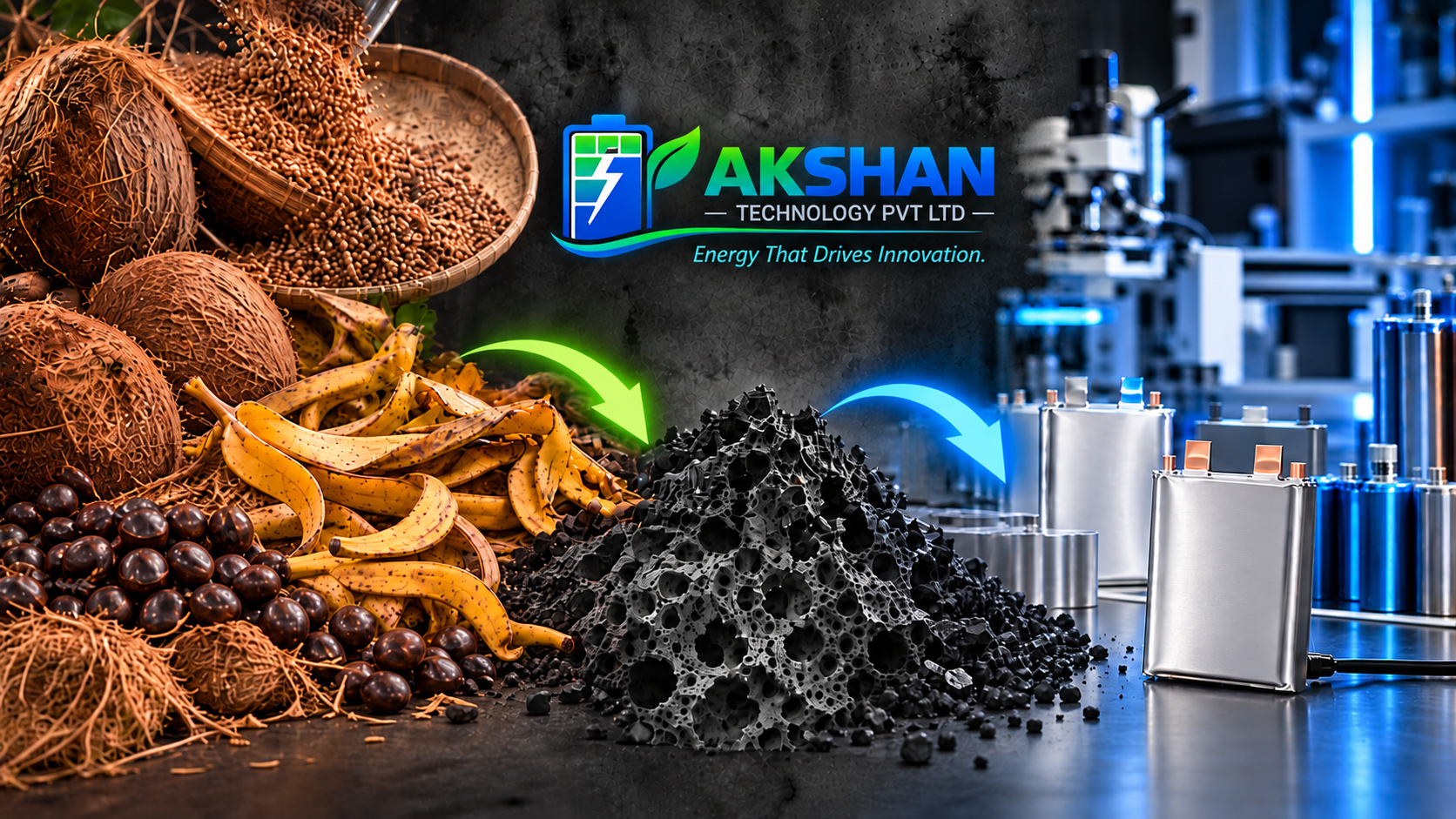
The company aims to develop solid-state batteries using processed agricultural and biological waste materials. This could help make use of waste and reduce dependence on lithium-based materials sourced from other countries.
However, this technology is still under development. Further research is needed to confirm whether these materials can be used to make batteries that work efficiently, safely and reliably.
Turning Agricultural Waste Into Battery Materials
One of the most distinctive aspects of Akshan Technology's approach is its focus on agricultural waste.
The founder points to the availability of agricultural resources in South India as a reason to investigate materials that could potentially be used in battery development. Instead of depending solely on conventional battery inputs, the company is exploring whether waste-derived materials can serve a role in its proposed solid-state battery design.
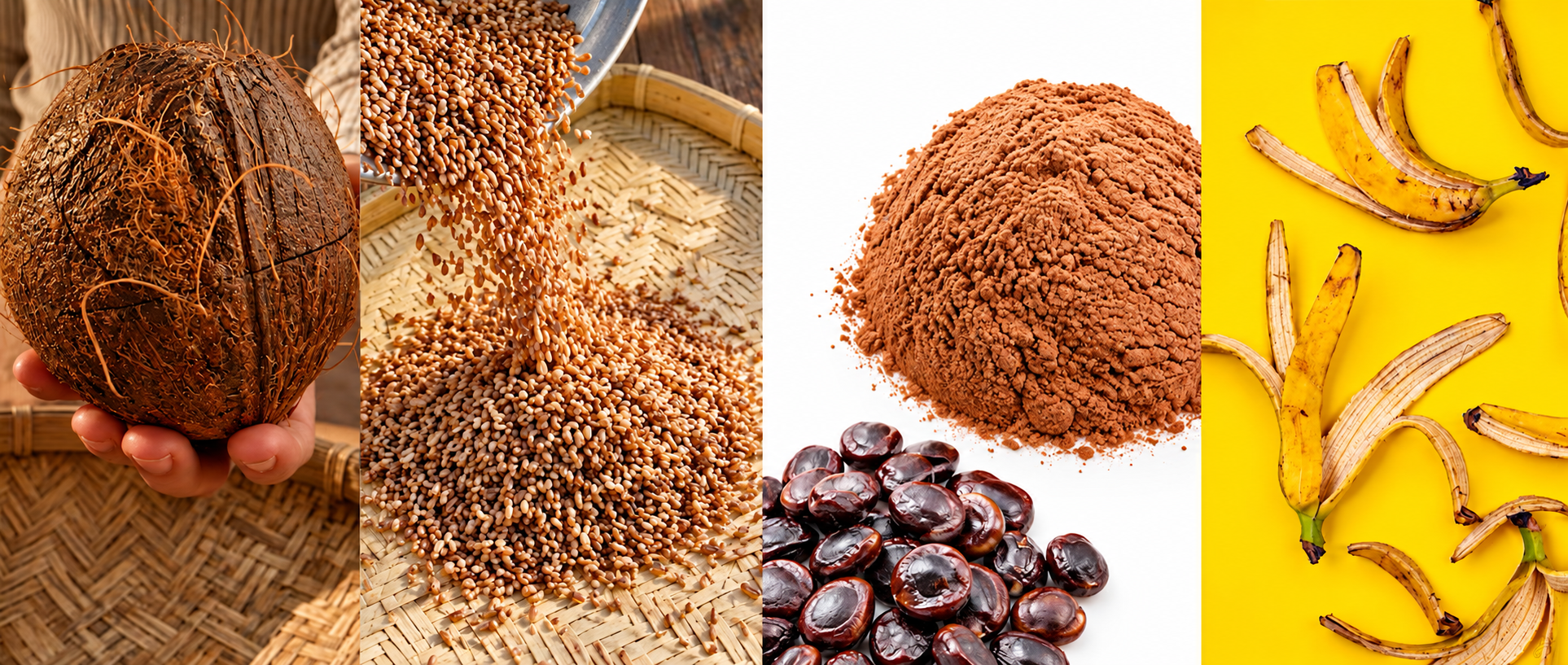
According to the podcast, the materials under consideration include:
Rice-derived materials
Tamarind seed powder
Banana peel-derived materials
Coconut-related materials mentioned in the discussion
These materials are intended to undergo processing and preparation before being incorporated into the proposed battery structure.
The central idea is to investigate how agricultural waste can be converted into useful materials for energy storage. If technically and commercially viable, this approach could create a connection between agricultural resource utilisation and battery manufacturing.
However, the material composition alone does not establish battery performance. The startup will need to demonstrate how the processed materials behave in a battery and whether the resulting design can meet the required performance, durability and safety standards.
How the Proposed Battery Works
Akshan Technology is investigating a battery architecture that replaces the liquid electrolyte found in conventional lithium-ion batteries with a solid electrolyte.
In a rechargeable battery, the electrolyte enables ions to move between the electrodes during charging and discharging. The company's research focuses on developing an alternative electrolyte using processed biological materials.
The development process described in the podcast involves several stages.
1. Material Selection
The first step involves identifying and preparing agricultural and biological waste materials for experimentation. The company is investigating how selected materials can be used in its proposed battery design.
2. Processing and Carbonisation
The selected materials undergo processing. The founder specifically mentions converting the relevant material into carbon as part of the development work.
This stage is important because the characteristics of the processed materials can influence their suitability for battery applications.
3. Material Mixing and Assembly
After processing, the materials are prepared for integration into the proposed battery structure. The development work includes investigating the electrolyte and its relationship with the battery's electrodes.
4. Prototype Fabrication and Testing
The company is initially considering coin-cell batteries as a development format. These small cells can help researchers investigate material behaviour and evaluate a battery design before moving towards larger formats.
Why Use Agricultural Waste Instead of Conventional Materials?
The motivation behind Akshan Technology's research extends beyond the battery itself. It also concerns the availability and cost of materials.
Reducing Dependence on Imported Resources
Lithium and other battery materials are part of global supply chains. Dependence on imported inputs can expose manufacturers to price fluctuations and supply constraints.
By investigating locally available biological materials, Akshan Technology hopes to identify alternatives that could reduce some of these dependencies.
Exploring the Potential for Lower Costs
Agricultural waste may offer a potentially accessible source of raw material. The company believes this could help reduce material costs compared with certain conventional approaches.
However, inexpensive raw materials do not automatically result in an inexpensive battery. Processing, purification, manufacturing equipment, quality control and testing all contribute to the final cost.
The company will need to determine whether its proposed materials offer a meaningful cost advantage when evaluated across the complete production process.
Making Productive Use of Waste
The third motivation is resource utilisation. Agricultural waste is the starting point for the company's research rather than simply a material to discard.
If the proposed battery technology proves viable, it could offer a way to turn selected waste streams into useful industrial inputs.
For now, these are the opportunities Akshan Technology is investigating, rather than demonstrated commercial advantages.
Can Solid-State Batteries Address Safety Concerns?
Battery safety is another important part of the company's motivation. The founder discusses thermal runaway and fire-related risks associated with lithium-ion battery systems. He sees the use of a solid electrolyte as a potential way to address some of the concerns associated with liquid electrolytes.
Solid-state battery research more broadly seeks to develop battery designs that can offer advantages in areas such as safety, energy density and durability.
However, the term solid-state alone does not guarantee that a battery is safe or superior. Its performance depends on the materials, cell design, manufacturing process and operating conditions.
Akshan Technology will need to validate its own design through controlled testing, including assessments of electrical performance, cycle life, temperature behavior and safety. The company has not yet established these outcomes through the testing described in the podcast.
Support From the Startup Ecosystem
Akshan Technology has also benefited from support within the startup ecosystem.
The founder discusses support from the Sona Incubation Foundation↗, including access to laboratory facilities, monitoring, workshops and boot camps. He also mentions external mentors who can provide guidance.

For an early-stage hardware startup, these resources can be particularly valuable.
Unlike a software product that can often be developed and tested primarily on a computer, battery research requires physical materials, experiments and appropriate testing facilities.
Access to laboratories and technical guidance can help a founder investigate a concept without immediately building a complete independent research infrastructure.
Such support does not remove the technical and commercial challenges, but it can provide a useful environment in which to address them.
A Business Model Built Around Battery Manufacturers
Akshan Technology is primarily targeting original equipment manufacturers (OEMs) and other battery manufacturers rather than focusing exclusively on selling finished batteries directly to individual consumers.
The founder describes a potential go-to-market approach in which the company develops its product and works with manufacturers that can take it into the market. This could allow Akshan Technology to concentrate on its core research and product development while working with established manufacturers for commercial applications.
But the model will depend on the product's eventual maturity. Before a manufacturer can adopt a new battery technology, it will need evidence of technical performance, reliability, manufacturing consistency, safety and commercial viability. The company is therefore at an early stage of establishing the technology that would underpin its future business relationships.
What Has Akshan Technology Achieved So Far?
One of the most important details in the interview is the founder's description of the startup's current stage. The founder says the idea has undergone initial validation, and the company is now moving into material testing and further technical work.
The next steps include:
Testing the selected materials.
Developing the required carbon-based material.
Investigating the electrolyte and battery structure.
Fabricating and evaluating prototype cells.
Progressing towards more complete technical validation.
The interview does not establish that Akshan Technology has a commercially available battery, completed product validation, secured major funding or begun large-scale manufacturing.
That distinction matters. In deep-tech businesses, a research concept, a working laboratory prototype and a commercially deployable product represent very different stages of development.
The company's next milestone is to turn its material concept into a battery design supported by repeatable experimental results.
The Road Ahead for Akshan Technology
Akshan Technology's story is still being written. What began as an engineering educator's interest in developing a product has evolved into an early-stage research effort focused on solid-state batteries and agricultural waste.
The company is exploring whether materials derived from biological waste can contribute to an alternative electrolyte and battery design. It is also trying to address questions around material costs, resource availability and the safety challenges associated with battery technology.
There is still a substantial distance between this concept and a commercially validated product. Testing, technical performance, manufacturing feasibility and regulatory requirements will determine how far the idea can progress. But the central question behind Akshan Technology's work is worth examining: can resources that are readily available in India's agricultural economy become useful inputs for the next generation of energy-storage technologies?
For the company, the next step is not to claim that the problem has already been solved. It is to test the idea, learn from the results and build towards a product that manufacturers could eventually use.