
For many children, learning to read and write can be a challenging process. Traditional approaches often rely on memorising words, which may help children recognise familiar words but can leave them struggling when they encounter something new.
What if children could learn to read by understanding the sounds that make up words?
This is the idea behind Klariti Learning, an educational venture that focuses on phonics, creative writing, and public speaking for children. Alongside its children's programmes, the company offers training courses for parents, teachers, and educators who want to develop their skills or explore new career opportunities.
What began as an interest in children's learning has grown into a broader educational initiative, with opportunities for educators to teach, build their own classes, and potentially restart their professional journeys.
Why Phonics Matters in Early Education
Learning to read is one of the most important milestones in a child's education. However, children learn at different speeds, and the methods used to teach them can influence how confidently they approach reading and writing.
Klariti Learning places particular emphasis on phonics, a method that teaches children to recognise the relationship between letters and sounds. The company explains how traditional whole-word learning often involves memorising words. While children may become familiar with certain words through repetition, they might find unfamiliar words difficult to read or spell.
Phonics takes a different approach.
Instead of relying entirely on memorisation, children learn individual sounds and how to combine them to form words. This gives them a method they can apply when encountering unfamiliar vocabulary.
For example, a child who understands phonics can learn to break a longer word into smaller sound units or syllables. The child can then combine those parts to read the complete word.
Klariti Learning uses this approach to help children develop reading and spelling skills.
The broader objective is to help children become more confident learners who can approach new words with greater independence.
From a Personal Interest to an Educational Venture
The story of Klariti Learning began with an interest in children's education and the desire to make learning more accessible.
The idea developed through discussions about children's learning needs and the possibilities offered by phonics, creative writing, and other educational activities.
Rather than focusing exclusively on conventional academic learning, Klariti Learning chose to work in areas that help children develop foundational literacy and communication skills.
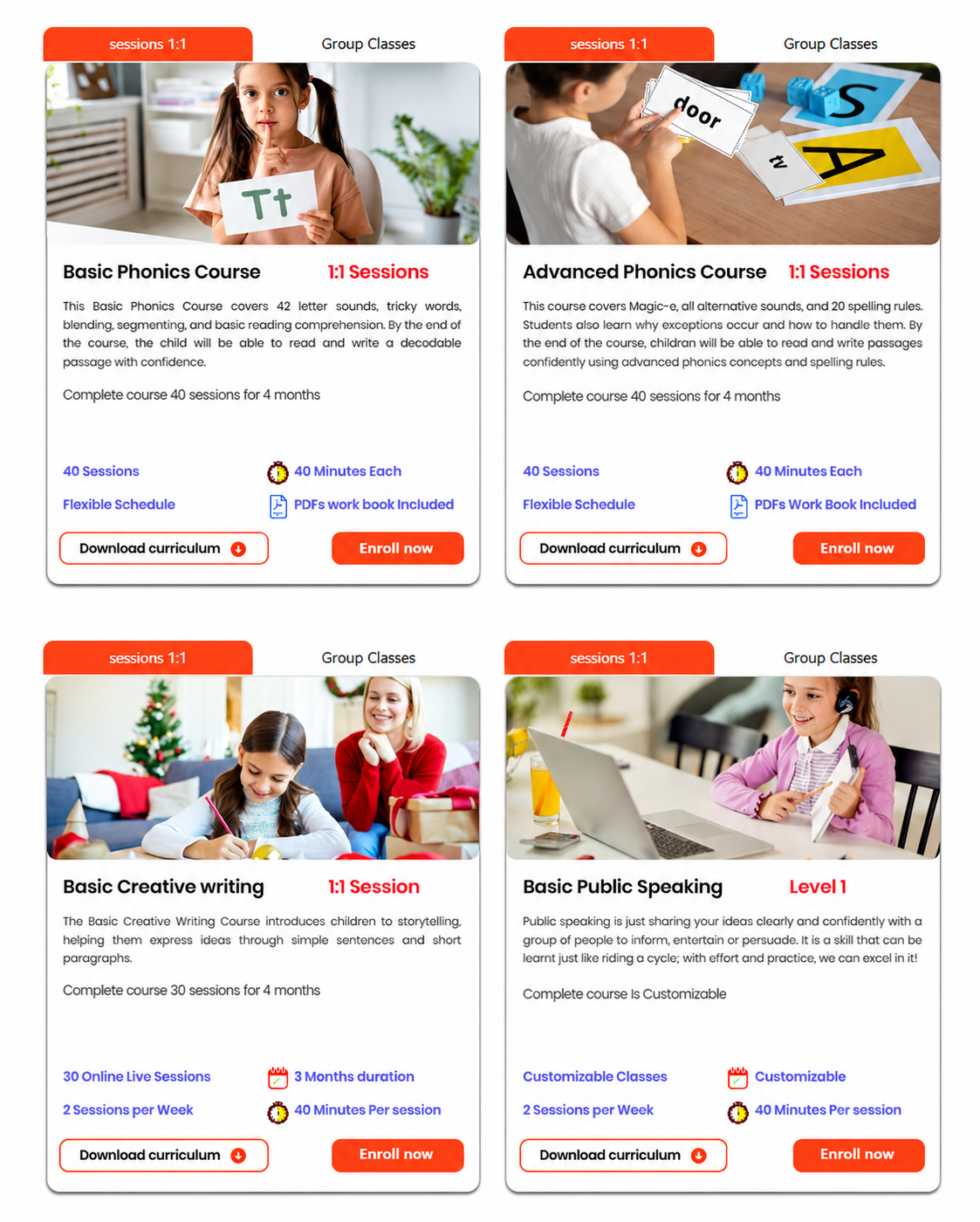
Its programmes cover three main areas:
Phonics: Helping children understand letter sounds and develop reading and spelling skills.
Creative writing: Encouraging children to express ideas through writing.
Public speaking: Helping children develop communication and presentation skills.
The company also recognised that there was an opportunity to support adults interested in these subjects. Parents wanted to understand how they could support their children's learning, while teachers and aspiring educators were interested in acquiring skills they could use professionally.
This led Klariti Learning to develop training programmes for parents, teachers, and educators alongside its classes for children. The result is an educational model that serves both young learners and adults who want to participate in the education sector.
How Klariti Learning Approaches Phonics
One of the central ideas discussed in the podcast is that children should not have to depend entirely on memorising individual words to become readers. Consider a child who has memorised ten words. The child may recognise those words but struggle when presented with unfamiliar vocabulary.
A child who understands the relevant letter sounds and how to blend them has another way to approach an unfamiliar word.
Klariti Learning introduces children to sounds and teaches them how to combine those sounds to read words. The company also explains how syllable division can help children approach longer words. For instance, the word fantastic may initially appear difficult to a young learner. Breaking it into smaller parts can make it easier to process and read.
The same principle can help children approach spelling by identifying the sounds and components of a word.
According to the company, this approach aims to make reading and spelling more manageable while helping children develop confidence.
Why Early Learning Matters
Klariti Learning identifies children aged four and above as the primary age group for its phonics programme. For younger children, the company recommends beginning with phonological-awareness activities rather than immediately introducing the full programme.
These activities can help children become familiar with the sounds of language. The company's stated goal is for children completing UKG, typically around five and a half to six years of age, to be able to read and write a decodable passage.
This reflects its emphasis on building foundational literacy skills during the early years of education.
Why Klariti Learning Uses Short, Structured Online Classes
Teaching children online requires more than simply delivering a lesson through a screen.
Young children have limited attention spans, and lessons need to be designed around their ability to remain engaged. Klariti Learning addresses this by using structured lesson plans and interactive activities.
The lessons are organised to make the learning process interesting and manageable for children. Klariti also recognises that children do not all learn at the same pace. A lesson plan that works well for one child may not be appropriate for another. Some children may grasp concepts quickly, while others may need more time and practice.
To accommodate these differences, Klariti Learning adapts its teaching according to each child's readiness and learning needs.
The company also offers one-to-one classes when required. This flexible approach allows the number of classes to vary depending on the child's progress and requirements. Rather than expecting every child to follow an identical learning schedule, the company aims to adjust its teaching to individual needs.
Learning From Children and Parents
An important part of educational programme development is understanding how children respond to lessons. Children have different learning speeds, interests, and levels of readiness. Their progress can help educators understand whether a teaching method is working and where additional support may be needed.
Klariti Learning's emphasis on structured lessons and flexible teaching reflects the importance it places on adapting its approach to individual learners. The podcast also describes parents whose children joined phonics classes after concerns about their reading and writing progress.
After completing the programme, some children were reportedly able to read and write with greater confidence. The company also mentions improvements in spelling and children's willingness to read storybooks.
These are experiences shared in the podcast rather than independently measured outcomes, but they illustrate the kind of progress the company aims to support. For Klariti Learning, the objective extends beyond helping children complete a course. It is about developing skills that they can continue to use as they encounter new words, books, and learning experiences.
Beyond Children's Classes: Training Parents and Educators
Klariti Learning's business model extends beyond teaching children directly. The company also provides training in phonics, creative writing, and handwriting for parents, teachers, and other individuals interested in education.
These programmes are particularly relevant to people who want to develop new teaching skills, change careers, or explore opportunities to work from home. The training is intended to give participants the knowledge and guidance needed to begin conducting their own classes.
According to the podcast, the company continues to guide trainees as they prepare lesson plans and work towards starting their classes. This support is an important part of the programme because learning a subject and teaching it to children are two different tasks.
Educators need to understand the content, organise lessons, communicate concepts clearly, and respond to the needs of different learners.
By offering training alongside practical guidance, Klariti Learning aims to help participants move from learning a skill to applying it in a teaching environment.
The company also provides opportunities for interested educators to work with its team, subject to available roles and suitability. This creates two potential pathways for trainees: starting their own classes or exploring teaching opportunities within the company.
The Challenges of Building an Education Business
Starting a business is one challenge. Building something that can operate consistently over time is another. In the podcast, Klariti Learning shares advice about confidence, consistency, and choosing the right people to work with.
The message is not that every idea will succeed simply because someone believes in it. Instead, the emphasis is on approaching entrepreneurship with a realistic understanding of the effort involved. The company highlights several important considerations.
1. Start Without Unnecessary Procrastination
People often spend considerable time thinking about a business idea without taking the first practical step.
Klariti Learning encourages aspiring entrepreneurs to take action rather than allowing fear or hesitation to prevent them from getting started.
However, taking action also means being prepared to learn, make adjustments, and respond to challenges along the way.
2. Understand the Importance of Consistency
A business may not produce immediate results.
Customer acquisition, programme development, team building, and operational improvements can take time.
The company emphasises the importance of consistency and the willingness to continue working even when results are not immediately visible.
This perspective recognises that entrepreneurship requires sustained effort rather than enthusiasm alone.
3. Choose Partners Who Complement Your Skills
The podcast also highlights the importance of selecting co-founders or team members who can collaborate effectively.
An individual may have expertise in one area but need support in others.
Building a business therefore involves identifying people who can contribute complementary skills and work towards shared objectives.
For an education company, this may include teaching expertise, technology, customer service, administration, and operations.
4. Be Realistic About Success
Another important message is that entrepreneurs should not assume an idea will automatically become a major success.
A business idea needs to be supported by confidence, practical execution, consistency, and the ability to work through uncertainty.
Klariti Learning's advice encourages aspiring founders to evaluate whether they are genuinely prepared to commit to the work involved.
These lessons are relevant not only to startup founders but also to anyone considering a new professional direction.
Support From Sona Incubation Foundation
Klariti Learning is an incubated startup at Sona Incubation Foundation. The company has access to a co-working space alongside other startups, creating opportunities for networking and collaboration.
Balancing Professional Responsibilities and Personal Life
The podcast also addresses the challenge of balancing work and personal responsibilities.
For women managing professional commitments alongside family responsibilities, finding time for everything can be particularly difficult.
Klariti Learning acknowledges that a perfect work-life balance may not always be possible.
Rather than presenting balance as a permanent state in which every responsibility receives equal attention, the conversation recognises that priorities can change.
Some periods may demand more time at work, while others require greater attention to family or personal commitments.
This is a realistic perspective on entrepreneurship and professional life. Building a business requires responsibility, but it also involves recognising personal limitations and adapting to changing circumstances.
The company's message is that people need to find an approach that works for their own situations rather than trying to meet an idealised definition of perfect balance.
Final Thoughts: Building Confidence Through Learning and Opportunity
Klariti Learning's journey highlights how an interest in children's education can develop into a business serving both young learners and aspiring educators. Its focus on phonics reflects an effort to make early reading more approachable by helping children understand sounds rather than depend entirely on memorising words.
Its work in creative writing and public speaking broadens that focus to include communication and self-expression. Meanwhile, its training programmes create opportunities for adults, particularly women exploring a return to professional life, to develop teaching skills and consider new career paths.
The company's experience also highlights the realities of entrepreneurship: growth requires consistency, collaboration, practical execution, and the willingness to take responsibility.
Ultimately, Klariti Learning's story is about more than teaching children to read. It is about connecting education with opportunity-helping children build foundational skills while giving interested adults another way to participate in the learning process.
That combination is what makes its journey worth following.