
Pregnancy is a journey that requires continuous attention, care, and medical supervision. While regular hospital visits allow doctors to monitor the health of both mother and baby, there are periods between appointments when continuous monitoring may not be available.
For women experiencing high-risk pregnancies, this gap can become particularly important. Monitoring certain pregnancy-related health parameters outside the hospital could help doctors receive more regular information about a patient's condition.
This is the problem that Embryo↗ is working to address.
Embryo is a healthcare technology startup focused on innovating motherhood through technology. The company is developing a wearable IoT-based device intended to support continuous pregnancy monitoring beyond the traditional hospital environment.
Its vision is to bring pregnancy monitoring closer to patients, helping connect mothers, healthcare professionals, and technology through a wearable solution.
The Problem: Pregnancy Monitoring Beyond Hospital Visits
Traditional pregnancy care involves scheduled consultations, medical examinations, and monitoring at healthcare facilities. However, monitoring does not always continue when a pregnant woman returns home.
During the podcast conversation, Embryo highlighted the lack of accessible devices for continuously monitoring certain pregnancy-related parameters outside hospitals.
The discussion particularly focused on high-risk pregnancies, where monitoring can be important for both maternal and fetal health.
The company identified a need for a solution that could help monitor parameters such as:
Uterine contractions
Amniotic fluid levels
Maternal health parameters
Fetal heartbeat
Body temperature
The broader idea is to make relevant health information available beyond occasional hospital visits, supporting doctors in evaluating a patient's condition.
This identified gap became the starting point for Embryo.
The Meaning Behind the Name Embryo
The company name reflects its focus on motherhood and pregnancy. During the conversation, the company explained that it chose the name Embryo because its work is centred on maternity and the different stages associated with motherhood.
Its stated vision is to innovate motherhood for the next phase through technology.
Rather than approaching healthcare technology as just another device category, Embryo is positioning its work around a specific healthcare need: making pregnancy monitoring more accessible beyond hospital settings.
The Product: A Wearable IoT Device for Pregnancy Monitoring
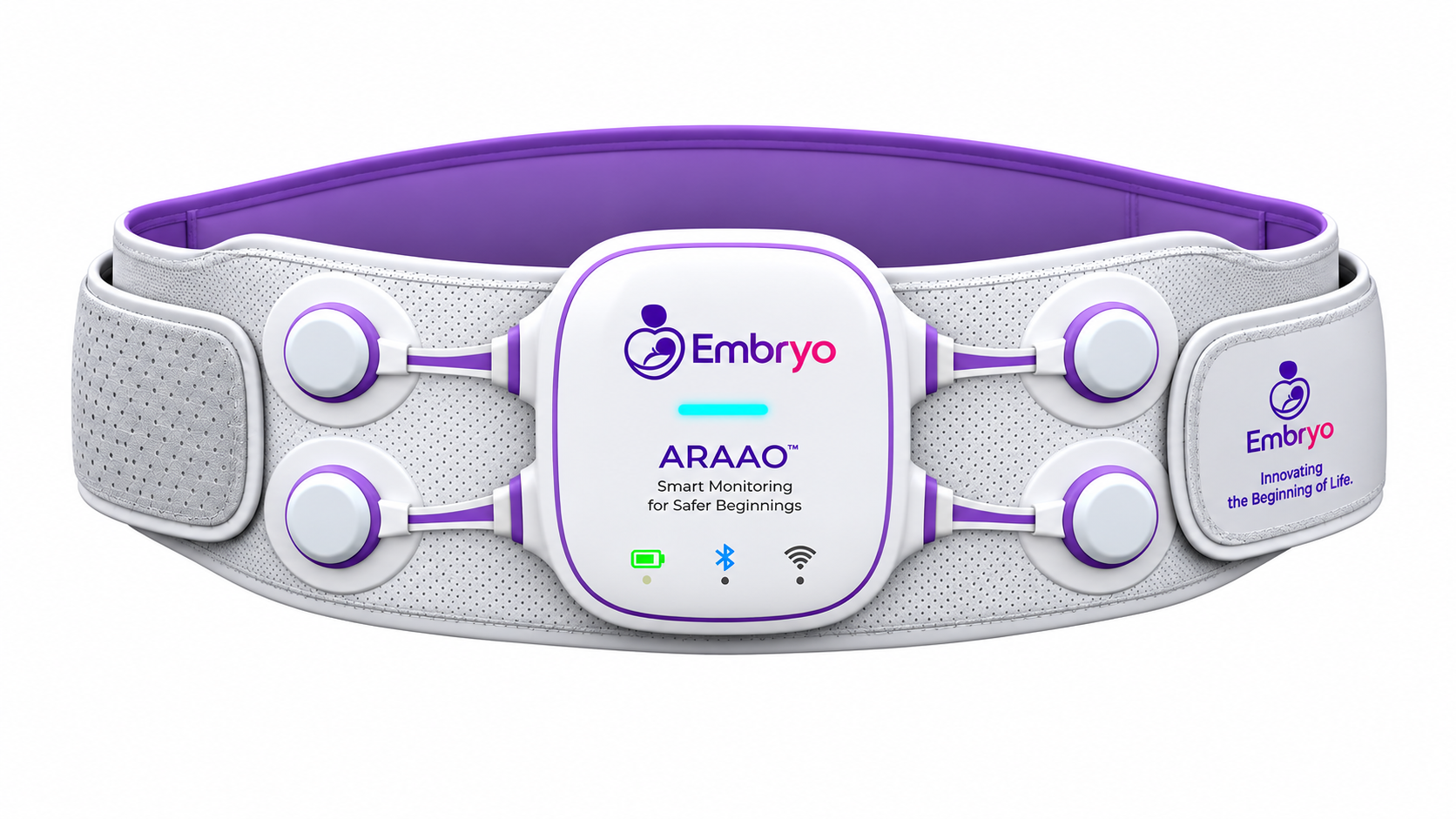
At the centre of Embryo's work is a wearable IoT-based device designed for pregnancy monitoring. The device is described in the podcast as a wearable solution that can be used from home. Its purpose is to monitor pregnancy-related parameters and make the readings available for medical evaluation.
The company discussed monitoring contractions, fluid levels, and other basic health parameters. Other parameters mentioned in the conversation include maternal and fetal heartbeat and body temperature. The device is also described as Bluetooth-connected, allowing readings to be communicated for further evaluation.
The intended process is straightforward:
The pregnant woman wears the monitoring device.
The device collects the relevant health readings.
The readings are communicated through its connected system.
Doctors evaluate the reported parameters and compare them with appropriate ranges.
Medical professionals can assess whether further attention is required.
The goal is to support monitoring outside the hospital and help doctors access relevant information between scheduled visits. Importantly, the device is intended to support medical evaluation rather than replace professional diagnosis or emergency care.
A Wearable and Non-Invasive Approach
Another feature highlighted during the podcast is the device's wearable and non-invasive design. The company described the product as lightweight and wearable, with the intention of making it suitable for use beyond hospital settings.
This approach is relevant because a pregnancy monitoring solution needs to fit into the everyday lives of patients while supporting the monitoring requirements recommended by healthcare professionals.
Embryo also discussed the possibility of using the device based on the stage of pregnancy and the doctor's recommendation. This indicates a focus on using the solution for patients whose medical circumstances may require additional monitoring, rather than assuming that every pregnancy requires the same monitoring approach.
Focusing on High-Risk Pregnancies
Embryo's initial business approach is particularly focused on high-risk pregnancies.
The podcast discussion mentions patients with conditions such as diabetes and pregnancies involving IVF as examples of groups hospitals may identify for closer monitoring. The intended model is for hospitals and doctors to assess individual patient conditions and recommend the wearable device for a suitable period.
This hospital-led approach is important because pregnancy monitoring requirements can differ from one patient to another. By working with healthcare institutions, Embryo aims to introduce its technology through medical professionals who understand the patient's health condition and monitoring needs.
The Business Model: Working Directly With Hospitals
Embryo has discussed a business-to-business approach, with hospitals serving as its primary institutional customers.
Under this model:
Hospitals identify patients who may benefit from additional monitoring.
Doctors assess the patient's health condition.
Suitable patients may be recommended to use the wearable device for a specific period.
Embryo plans to sell its product directly to hospitals after completing the required product development and licensing processes.
This strategy gives the company a defined route towards entering the healthcare market.
Instead of depending entirely on individual consumers discovering and purchasing the product, Embryo intends to build relationships with hospitals and introduce the solution through established healthcare channels.
From Prototype to Product Development
Embryo has progressed beyond the initial idea stage. The company stated that its prototype had been completed and that it had entered the product development stage.
The next phase involves progressing towards the processes required before commercialisation.
The conversation also mentioned a planned timeline of approximately six to seven months for the next phase of activities. This was the timeline discussed at the time of the podcast and should not be interpreted as confirmation of a current launch date.
The company also stated that it had already established tie-ups with more than 17 hospitals in its region.
These hospital relationships are an important part of its planned market-entry strategy. Following product development and the necessary licensing, Embryo intends to sell directly to hospitals so the device can be used with suitable patients.
Incubation Support and Startup Ecosystem
Building a healthcare technology startup requires more than just developing an innovative product. It also involves access to the right ecosystem, institutional guidance, industry connections, and financial support to transform an idea into a commercially viable solution. For Embryo, its incubation and startup ecosystem connections form an important part of this development journey.
Embryo is incubated at Aakam Shine, where the company is part of an environment that encourages innovation, entrepreneurship, and the development of emerging businesses. Being associated with an incubation ecosystem can provide startups with opportunities to strengthen their business approach, refine their product development strategy, connect with relevant networks, and prepare for the challenges involved in bringing a new technology to market.
The company's journey also connects with organisations and initiatives such as StartupTN, which are part of the wider startup ecosystem supporting entrepreneurship and innovation. Such ecosystem connections are valuable for early-stage companies, particularly those working in specialised sectors like healthcare technology, where product development requires technical expertise, continuous refinement, and a clear path towards commercialisation.
Embryo has also discussed support through the Startup India Seed Fund Scheme. Early-stage funding support is particularly relevant for hardware and HealthTech startups because developing a wearable healthcare device involves several stages, including product engineering, prototype development, testing, and preparation for market entry. Access to funding and institutional support can help companies work through these stages and move closer to commercial readiness.
For Embryo, these incubation and ecosystem connections represent an important part of its journey towards developing wearable technology for pregnancy monitoring. As the company continues working on its product, the support network around it can play a role in strengthening its development efforts and preparing the business for its next phase of growth.
The Challenges of Building a Healthcare Startup
Embryo's journey also reflects some of the challenges involved in developing an early-stage healthcare company. Unlike businesses that can launch a software product quickly, a wearable healthcare solution must move through product development and the relevant licensing processes before it can enter its intended market.
The company also needs to build relationships with hospitals, establish a suitable commercial model, and ensure that the product meets the requirements of its intended use.
The podcast conversation highlighted two important lessons for startup founders: consistency and validation.
For a healthcare startup, these principles are especially meaningful. Progress requires continuous development, while validation helps ensure that the product is being built around a genuine problem and that its capabilities are properly assessed.
Embryo's Five-Year Vision
Looking ahead, Embryo shared a vision centred on continuous monitoring for high-risk pregnancies. The company's long-term ambition is to use its wearable technology to support pregnancy monitoring and make relevant health information more accessible beyond hospital visits.
This vision reflects a broader opportunity for healthcare technology: connecting patients and healthcare professionals through devices that can collect and communicate useful information outside traditional clinical environments.
As the company moves forward, product development, licensing, hospital relationships, and further market preparation will be important steps in turning this vision into a practical healthcare solution.
Conclusion: Bringing Pregnancy Monitoring Closer to Mothers
Embryo is working on a healthcare challenge that matters to mothers, families, and medical professionals: how to support pregnancy monitoring beyond hospital visits.
Through its wearable IoT-based monitoring device, the company aims to make selected pregnancy-related health parameters accessible for medical evaluation outside traditional healthcare settings.
With a completed prototype, ongoing product development, a team of nine, government incubation support, and more than 17 hospital tie-ups mentioned during the podcast, Embryo has outlined its early direction towards commercialisation.
Its next steps involve progressing through product development and licensing before introducing the device through hospital partnerships. Embryo's journey is an example of how a focused healthcare startup is exploring the role of wearable technology in maternal care.